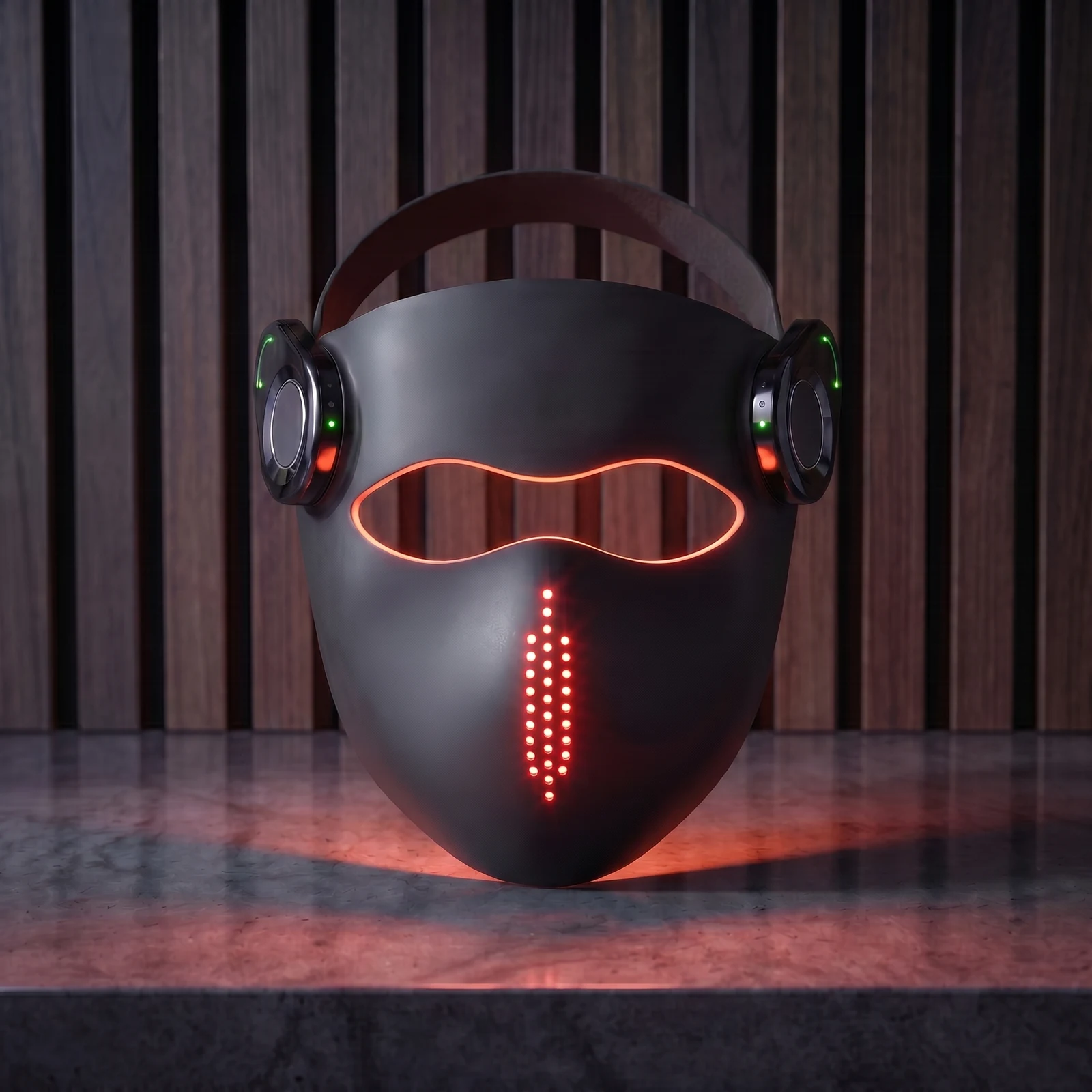
The best LED face mask for you is one that fits comfortably, suits the routine in its instructions and comes with purchase terms you understand. For Canadian buyers, start with the exact model and the total in CAD. These five masks cover a useful range of budgets and features without treating more LEDs or wavelengths as proof of better results.
How we chose these options: Hale sells FACE and RLPRO devices. This is a manufacturer buying guide based on published specifications and purchase terms, not an independent hands-on test. Our shortlist covers different prices and setups; it is not a clinical ranking. Model links are the sources for the listed offers, checked October 1, 2026.
Compare LED face masks available to Canadian buyers
| Model and source | Listed price | Published hardware | Who should consider it |
|---|---|---|---|
| Hale FACE | $549 CAD | 236 LEDs; 460 / 665 / 850 / 1064 nm; cordless USB-C charging | A cordless four-wavelength option below $600 CAD. |
| Coldture FACE | $599 CAD | 72 quad-chip LEDs / 288 light points; 460 / 665 / 850 nm; 280 g | A lighter mask with a remote control. |
| CurrentBody Skin Series 3 | $799.99 CAD | 750 LEDs; six wavelengths; app-based customisation | More control over wavelength selection and saved routines. |
| Omnilux Contour Face | $535 CAD | 132 LEDs; 633 / 830 nm; flexible silicone mask | A red and near-infrared option without a blue-light channel. |
| Therabody TheraFace Mask Glo | $499.99 CAD | 504 LED lights; red, red + infrared and blue modes; 514 g; cordless | A mask with an added scalp-vibration feature. |
LEDs, chips and light points are manufacturers' counting conventions; the numbers are not interchangeable measures of output. Prices are the listed device offers, not a promise of availability or an all-in delivered total. Omnilux's price is a Canadian retailer offer; the other competitor links are brand stores.
Which mask belongs on your shortlist?
Hale FACE
A cordless four-wavelength option below $600 CAD. One-year warranty. Review fit and the conditions of the 30-day return policy before ordering. Hale FACE lists $549 CAD in the checked offer.
Coldture FACE
A lighter mask with a remote control. One-year parts warranty. The checked page lists four-week delivery; confirm the current dispatch estimate. Coldture FACE lists $599 CAD in the checked offer.
CurrentBody Skin Series 3
More control over wavelength selection and saved routines. This is Series 3, not Series 2. Check the selected kit and current returns and warranty terms. CurrentBody Skin Series 3 lists $799.99 CAD in the checked offer.
Omnilux Contour Face
A red and near-infrared option without a blue-light channel. Price is from Canadian retailer Loshen & Crem. Its page lists a two-year device warranty, one year on the controller, and no 30-day satisfaction guarantee. Omnilux Contour Face lists $535 CAD in the checked offer.
Therabody TheraFace Mask Glo
A mask with an added scalp-vibration feature. Mask Glo is a separate model from the original TheraFace Mask. Check the current stock, warranty and return terms. Therabody TheraFace Mask Glo lists $499.99 CAD in the checked offer.
How to choose a red light therapy mask
Start with fit and daily practicality
A flexible mask and a rigid mask can sit very differently around the nose, cheeks and eyes. Look at the straps, eye openings, controller and charging arrangement, then check the return conditions for a device you have opened or tried. Cordless use can make a routine easier, but it is not a measure of treatment quality. Follow the instructions for your exact model rather than a universal ten-minute routine.
Compare the exact generation
CurrentBody Series 3 has different hardware from Series 2. TheraFace Mask Glo is not the original TheraFace Mask. A review of an older generation cannot establish the specifications or value of the model in your basket. Match the product name, selected bundle and manual before comparing prices.
Separate published specifications from results
Wavelengths describe the light a device emits. LED count describes its listed array. Neither establishes that one mask produces better skin outcomes than another. Look for evidence involving the actual device and routine, including the study population, comparison group and reported limitations. A study of one model is not a head-to-head test of every mask in this table.
We do not present a matched independent output test of these masks or rank them by headline irradiance. A meaningful output comparison needs the same measurement geometry, instrument, active modes and reporting method. Our CurrentBody comparison and Therabody comparison explain the model differences.
What the research says about red and near-infrared light for skin
The trial record behind this device class is real and specific. Pooled analyses of 31 dermatology studies report significant LED effects for skin rejuvenation targets, including photoaging and wrinkle reduction (PMID:36310510), and a systematic review concluded a reasonable body of evidence supports low-level light therapy for skin rejuvenation (PMID:33471046). The caveat matters as much as the finding: those studies test wavelength-class effects on skin tissue. They do not test one mask against another, and evidence from home-use devices trails clinical-device evidence. A mask that publishes its wavelengths and dose lets you judge whether it fits the ranges tested; a mask that does not publish them fits no range at all.
Check the actual Canadian checkout total
Confirm the currency, tax, delivery charge and any import charges before paying. A warranty against defects is different from a satisfaction return: ask when the return period starts, whether opened devices qualify and who pays return shipping. Retailer terms may differ from a manufacturer's direct-store offer.
LED mask or a panel?
A mask is shaped for facial use. A panel is a different setup for exposing a larger area and needs room for the device, stand and working distance. If facial skincare is your priority, start with fit and ease of use. If you want a setup for your body as well, compare the RLPRO panel sizes and read our mask, panel and wand guide before spending more.
Questions before you buy
Is Hale FACE the same as Coldture FACE?
The published specifications differ. Hale lists four wavelengths and 236 LEDs; Coldture lists three wavelengths and 72 quad-chip LEDs / 288 light points. Similar photographs are not enough to establish identical hardware. Compare the exact specification and terms rather than assuming the products are interchangeable.
Does a more expensive mask work better?
Price alone does not establish that. A higher price may buy different controls, construction or support. Choose features you will use and evaluate the evidence for the model, rather than paying for a larger number in a specification table.
How often should I use it?
Use the schedule and eye-protection instructions supplied with your device. Do not transfer another brand's protocol to your mask or assume longer sessions are better. If a medical condition or medication may affect your suitability, check with your clinician and the device manufacturer.
What are Hale's purchase terms?
Hale FACE has a one-year warranty. Eligible returns are subject to our Returns & Refund Policy. Read the conditions before ordering and use the product page and checkout for the current price and shipping information.
Ready to choose?
Explore Hale FACE and order online, or use the linked model pages above to compare another option. Start with the fit, features and purchase terms that matter to you.